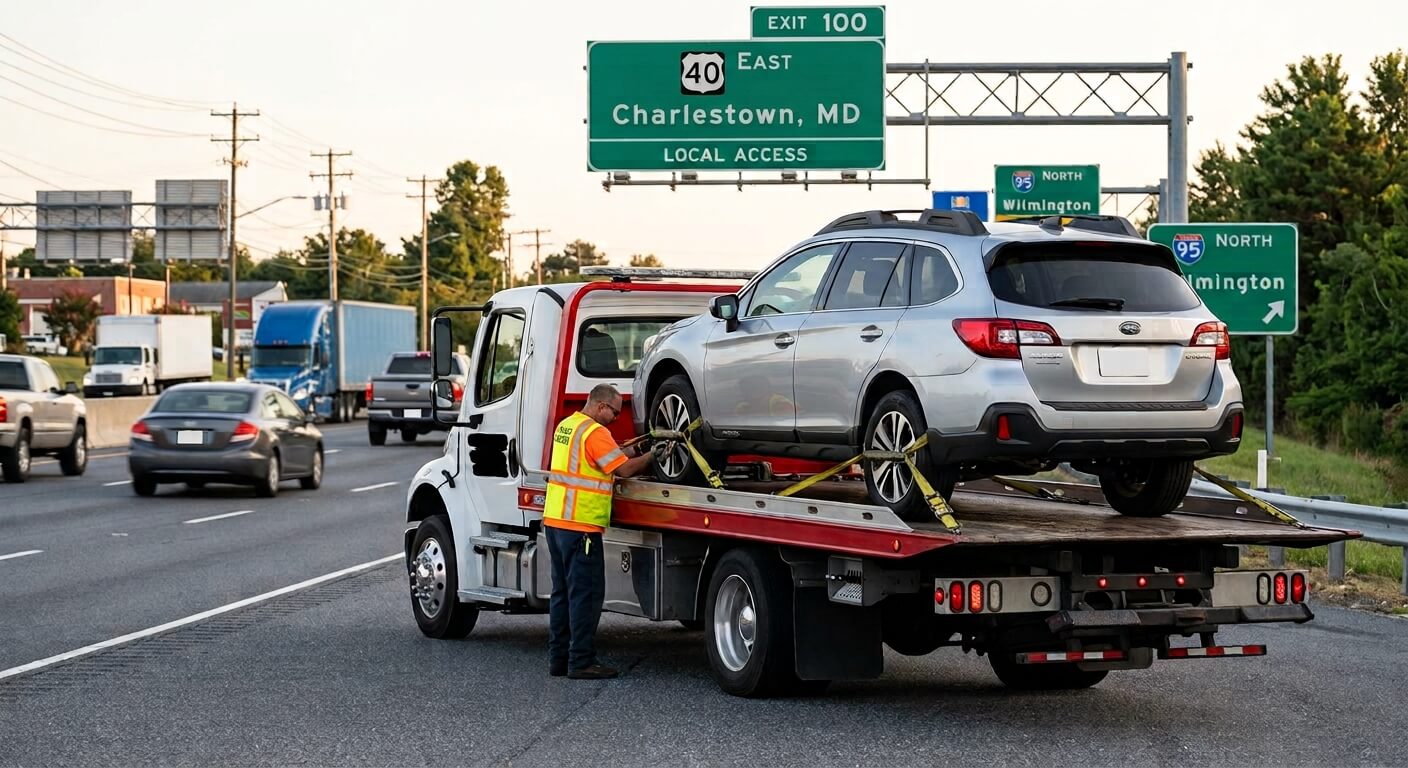
Towing modern All-Wheel-Drive (AWD) and full-time Four-Wheel-Drive (4WD) vehicles requires strict adherence to drivetrain mechanics. Unlike legacy rear-wheel-drive trucks with manual mechanical transfer cases that could be shifted into a true mechanical neutral, modern crossovers, sedans, and SUVs feature complex electronic center differentials, viscous couplings, and multi-plate clutch packs.
For drivers navigating commuters routes and local roadways in Charlestown, MD, towing an AWD vehicle improperly can ruin a transmission or transfer case in just a few miles.
1. The Fluid Starvation Threat to Viscous Couplings and Center Differentials
In full-time AWD systems, power is continuously distributed between the front and rear axles. When a vehicle is towed with two wheels rolling on the pavement (such as on a traditional wheel-lift truck), a massive speed differential is forced between the front and rear driveshafts.
- Transmission Fluid Pump Inactivity: In most automatic transmissions and transaxles, the internal fluid pump is driven directly by the input shaft (connected to the running engine). When a vehicle is towed with the engine off, the output shaft spins rapidly while the fluid pump remains stationary. This deprives the center differential, planetary gear sets, and bearings of pressurized hydraulic fluid, causing rapid friction heating and thermal seizure.
- Viscous Coupling & Clutch Shearing: Viscous couplings rely on high-viscosity silicone fluid that thickens under heat to transfer torque. Forcing one axle to spin while the other remains stationary causes the internal fluid to overheat, shearing the internal plates and permanently locking the AWD unit.
Ensuring all four wheels remain stationary relative to the vehicle frame is the only way to prevent fluid starvation during transport.
2. Shift-by-Wire Actuation and Dead-Battery Neutral Lockouts
Modern luxury vehicles and late-model crossovers utilize shift-by-wire transmission controls rather than physical mechanical cables. When a vehicle experiences electrical failure or a dead battery, the transmission defaults to a spring-loaded Park pawl that mechanically locks the output shaft.
- Electronic Neutral Lockout: Without 12V auxiliary power, electronic solenoids cannot disengage the Park pawl or switch an electronic transfer case into neutral. Forcing a vehicle locked in Park onto a deck without specialized low-friction wheel skates can break the internal transmission park gear or snap tire traction.
- 100% Elevated Transport: Because many modern AWD platforms forbid rear-wheel rolling even with the engine running, total vehicle elevation via a dedicated flatbed deck is mandatory by most OEM manufacturer specifications.
3. Comprehensive Recovery Protocols Across All Vehicle Systems
Specialized mechanical considerations apply across every class of vehicle transport and emergency roadside intervention.
- Heavy Fleets & Commercial Drivetrains: Commercial box trucks and semi-truck tractor-trailers feature heavy rear drive axles. Towing a disabled heavy-duty rig requires pulling the axle shafts or removing the main driveshaft on-site to prevent turning the transmission gears without oil pressure.
- RV & Motorhome Chassis Clearance: Class A, B, and C motorhomes built on heavy chassis feature extended rear overhangs. Transporting these rigs requires heavy-axle lift systems that clear low-hanging rear bodywork and plumbing while maintaining frame balance.
- Motorcycle Three-Point Strapping: Motorcycles lack four-point stability and demand specialized transport methods. Securing cruisers, touring bikes, or sport bikes requires dedicated loading ramps and soft-tie straps anchored to frame members, preventing pressure on fork seals, handlebars, or fairings.
- 12V Voltage Regulation for Electronic Shift Release: Restoring temporary power to operate electronic shift-by-wire actuators or disengage electronic parking brakes requires regulated auxiliary power. Using professional jump packs prevents high-voltage surges across sensitive electronic control modules (ECUs).
- Wheel Torque Accuracy After Blowouts: Replacing a flat tire on a busy shoulder requires precise lug nut cross-torque execution to prevent warping brake rotors or damaging wheel stud threads under load.
- Non-Destructive Keyless Lockout Recovery: When electronic key fobs fail or keys are locked inside modern cabins, operators use non-destructive entry tools to bypass door seals without damaging internal wiring or side-impact sensors.
Specialized Local Recovery in Charlestown, MD
Protecting complex drivetrains and precision mechanical components requires matching the proper equipment to every recovery scenario.
Asrock Towing Service, located in Charlestown, MD 21914, provides specialized flatbeds, heavy recovery units, and equipped roadside service vehicles throughout Cecil County. Our team operates with transparent pricing and rapid dispatch across local roads and commuter corridors.
Call our dispatch line directly at (667) 910-8294 for immediate assistance.